Showing posts with label pet trade. Show all posts

Friday, 31 October 2014

Lets Celebrate Lemur's On World Lemur Day!

Today you may be more concerned with running into a Zombie or how you are going to make that sheet look like a ghost costume. What you may not be aware of is that today is also World Lemur Day. If you are reading this and thinking "what the hell is a Lemur" well fear not, because one of my friends has decided to write me an entire guest post on...... yes you guessed it Lemurs; enjoy!

The Lemurs, by Sharon White.
Out of all the primate's the Lemur's are the most diverse. Anyone who watched the BBC's “Madagascar” would've been enthralled with the footage showing off the primates that are only found on the island. With nearly 100 known species that live in all areas and all habitats of Madagascar, Lemur's have a lot of weird and wonderful physical and behavioural adaptations. Some of the species are nocturnal, active only in the daylight or both. Their diet ranges from fruits, leaves and bamboo to nectar and insects. Their physical sizes range from the smallest of primate species' Mouse Lemurs being a tiny 1oz, to the Indri at about18lb's. Social behaviours range from solitary lifestyles, monogamous pairs and large, complex social groups. Throughout the Lemur's, female dominance is typical and is found in very few other primate species and even rarer throughout mammals.

Gray Mouse Lemur

Indri Lemur

Here's some examples of the weirdness between different Lemur species:
  • Mouse, Dwarf and Fork-marked Lemurs are known for having seasonal periods of torpor, like hibernation, especially during the dry season when food supplies decrease. As is common with hibernating species, it's common for individuals to fatten themselves up and these small primates, increase volume in their tails (a fat reserve) before going into seasonal torpor. However, this activity varies even on a population level, some individuals can go into torpor and others will not.
Fork marked/crowned Lemur

  • Dwarf Lemurs hold branches and pick objects in between their second and third fingers, which is in contrast to the other Prosimian species and more like their South American cousins.

Fat-Tailed Dwarf Lemur

  • Sportive Lemurs are the smallest folivorous primate, which is a rare diet for a nocturnal mammal. The lack of sugars in their diet has meant that Sportive Lemurs have small home-ranges and short travel distances.
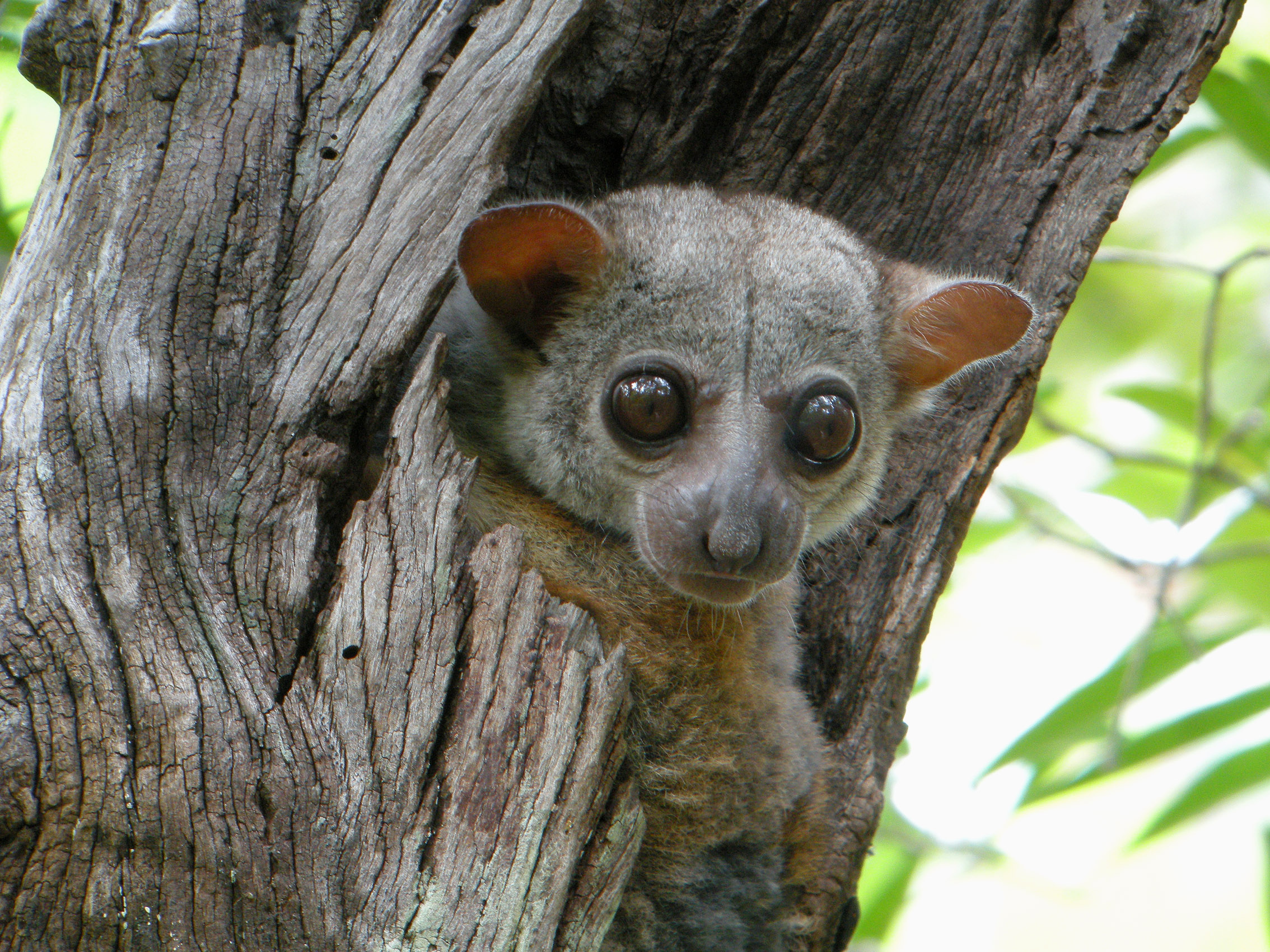
Sportive Lemur

  • The Lac Alaotra Bamboo Lemur is unique, amongst all primates, as it is restricted to marshland surrounding Lake Alaotra in eastern Madagascar and live amongst the stands of reeds and papyrus. There are two sub-populations for this species and are thought to swim.

 Lac Alaotra Bamboo Lemur

There is one species of Lemur, which is my personal favourite, that have blue eyes. The Sclaters Lemur, aslo known as the Blue-Eyed Black Lemur, is the only primate other than humans to be born with blue eyes.
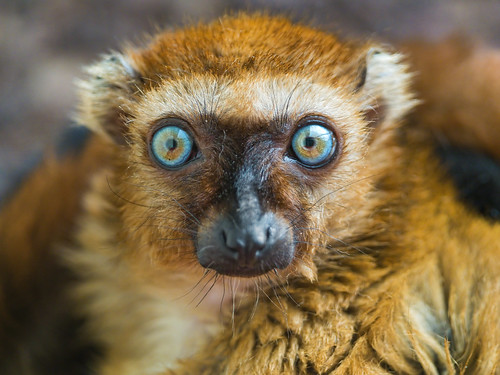
Female Sclaters Lemur

Lemur species are amongst the most endangered species in the world. Six species are on the top 25 most endangered primates in the world. Those species include the Red Ruffed Lemur, Blue-Eyed Black Lemur, Northern Sportive Lemur, Silky Sifaka, Madame Berthes Mouse Lemur and the Indri. All these species are very different in their shape, size, diet and habitat, but all populations are declining due to habitat loss and hunting, amongst other things. 

Silky Sifaka

Despite, the small amount of information provided here, you can see how amazing these primates are and how we really need to help protect them for future generations! To learn more about how you can help the Lemurs check out the Duke Lemur Center.

Ring Tailed Lemur

About the author: 
Sharon White is passionate about primates and wildlife in general, but she simply adores Lemurs. Sharon spends her time wither working as a photographer or with the Cheshire Wildlife Trust, passing on her passion for the natural world.
                                               ______________________________________________________

Disclaimer:
"The views and opinions expressed in the Diary of a Primatologist blog (except guest posts) are purely my own and are not in any way linked to any organisations I may represent or work with unless otherwise stated. All photos are my own unless otherwise stated and a source will be provided where other photos are used. If they are your photos and you would like them removed please just ask. The author retains full copyright for all content and photos and written permission is required before their use. The owner of the site is not liable for any content accessed through links posted."

Picture Sources:
Gray Mouse Lemur - http://www.phocus.org/images/animals/mammals/primates/lemurs/mmu-juv-lge-0213.jpg
Indri Lemur - http://media.npr.org/assets/img/2013/02/01/indri-lemur_wide-fcf5751b5d196f15456503c6c6bdc6cf7f98a974.jpg
Fork-marked/crowned Lemur - http://naturefiles.files.wordpress.com/2010/12/1112434235_2010_10_madagascar2_239.jpg
Fat-tailed Dwarf Lemur - http://dharing.zenfolio.com/img/s1/v6/p674106315-3.jpg
Sportive Lemur - http://upload.wikimedia.org/wikipedia/commons/7/77/Lepilemur_edwardsi.jpg
Lac Alaotra Bamboo Lemur - https://blogger.googleusercontent.com/img/b/R29vZ2xl/AVvXsEgCWZCkFm1gFG2VBiQ7JWk2u1YqUc70o8kBMeeGrBYZRlXVJXj1p-RG9tmopdWo63EgVCOtS-YwhMb6tr0-qxDdkLhsqTvt853fxwkYG__VM0lxuP6hsOOaSlWBoYpneUm_GA4n-aG9guq5/s640/lemur+22.jpg
Female Sclaters Lemur - http://farm9.static.flickr.com/8078/8291308573_5ec41214fe.jpg
Silky Sifaka - https://blogger.googleusercontent.com/img/b/R29vZ2xl/AVvXsEhZhEr3CBVs-AQmP26KzDQgwsIxWmMF7zVKg6Vw-0dv8nMa4bLC0SFZ_V6tFciTdiWXrcudTNojIgu0j_MB9Ln6v9_n2JTky4xpqruDxPDUl-EBWPKk-OgDvQFayN-PDmG8B4MGCz3T-SM/s1600/CD5294-02.jpg
Ring-Tailed Lemur - http://images.fineartamerica.com/images-medium-large/ring-tailed-lemur-lemur-catta-portrait-pete-oxford.jpg

Tuesday, 22 April 2014

Guest Blog Post: Saving Spider Monkeys from the Mexican Primate Pet Trade.

Jess Hooper is a primatologist who is just finishing her MSc in Primate Conservation at Oxford Brookes University in Oxford, England. Jess is working closely with a Mexican monkey sanctuary (Ecoparque el Fenix) to rehabilitate spider monkeys from the Mexican primate pet trade. Jetting off to Mexico soon Jess writes about the work she is about to embark on.
 
"I'm very excited to have been asked to give my first guest blog, and I thank Luke for this opportunity to share my current work with primate rehabilitation in Mexico." - Jess Hooper
                            
                                -------------------------------------------------------------------------------------------------------------------


Primate welfare
I wanted to write a little about the importance of primate welfare and rehabilitation for those monkeys and apes with low conservation value-i.e. those which have unknown genetic value, are psychologically compromised, unsuitable for breeding, and/or release. I strongly believe that it is our duty, as primatologists and as human beings, to provide the utmost of care to those whose fate we have been responsible for. It is the human-primates of this world that extract our primate cousins from the wild, pluck babies from their mother’s chests and sell them on within the various ill-controlled wildlife trades. The trade I wish to discuss in particular is the illegal primate pet trade within Southern America, namely Mexico.

The Mexican primate pet trade
Spider monkeys (Ateles geoffroyi) are an arboreal primate, endemic to Mexico. Pet spider monkeys are illegally captured and transported to cities where they are sold in unsavoury market conditions to become a pet. It is national demand which stokes this market-untouched by the CITES convention which only influences international wildlife trade.

Like chimpanzees (Pan troglodytes), spider monkeys naturally exploit a fission-fusion society, whereby daily social groups vary in size and composition. Thus socialisation is fundamental to their psychological well being. A lack of intra-species socialisation whilst living as human-pets can cause severe implications to their development resulting in abnormal (or 'stereotypic') behaviour.

Spider monkey rehabilitation
I work closely with spider monkeys rescued and donated from the illegal pet trade at a Mexican monkey sanctuary Ecoparque el Fenix. I work to reduce stereotypic behaviours in ex-pet monkeys as well as to improve species-typical behaviour. Some monkeys I work with are unable to climb, the majority walk bipedally upon the ground like humans, and many are fearful towards other monkeys which they have never encountered before.
Nino, the monkey who walks bipedally like a human

I have taken a focal approach to studying these monkeys, to look at each monkey as an individual: with individual needs, past experiences, fears, and emotions. In doing so, I can understand them on a personal level, and determine which approach to use for each monkeys rehabilitation. Not all methods are suitable for every monkey. Some monkeys are unable to be socially integrated because the stress induces self-harming behaviour, whereas others benefit greatly from monkey company and quickly learn to cuddle, play and even share resources. Enrichment offers exercise to both the body and mind, swinging platforms encourage climbing and leaping behaviour, and novel enrichments provide stimulation.

Creating an enriched enclosure

Is it worth it?
Rehabilitation takes time, and there is limited support for such projects where the monkeys may never be ready for reintroduction. I desperately urge people to see primate rehabilitation as a separate issue from conservation-one of moral significance, one of responsibility. Only once we tackle the issues of rehabilitation can we bridge the gap between the welfare of abused individuals and conservation by restoring their conservation worth. These monkeys are still ambassadors of the forest and represent an educational tool of emotive power.

Spider monkeys


Meet the monkeys Jess is working with: ecoparqueelfenix.org
Keep informed with updates through her blog: http://primateworld.wordpress.com/ 
The pictures are owned by the author and under their copyright. 
Disclaimer:
"The views and opinions expressed in a guest blog post are that of the author and are not in any way linked to any organisations the site may represent or work with unless otherwise stated. The owner of the site is not liable for any content accessed through links posted."


Tuesday, 19 November 2013

The only venomous Primate in the world

Have you heard of a Slow Loirs? Well you may not have heard of one, but quite possibly seen one on a famous youtube clip called 'Tickling the Slow Loris'. The clip shows a woman, who has one as a pet, tickling it and it looks like the Slow Loris is enjoying it. In fact it is in it's defence mode, which is where the Slow Loris freezes.

Unfortunately this video has cause a worldwide rush to want a Slow Loris as a pet and this is endangering its very survival.

Interestingly the Slow Loris has venom and this can kill, also the name Slow Loris is not that accurate. They can actually move very fast covering 8km in one night.

I was lucky enough to hear Dr Anna Nekaris talk at an evening lecture in Devon the other week on her work with the Slow Loris. Dr Nekaris has been working with nocturnal primates, especially the Slow Loris for 20 years. What she doesn't know about the Slow Loris is not worth knowing. It was a fabulous talk and so moving with the problems they face, and inspiring about the work she is doing with with her Little Fireface Project - http://www.nocturama.org

Myself with Dr Nekaris after her amazing talk on the plight of the Slow Loris.

Dr Nekaris made a wonderful BBC documentary about her work, but the most crucial bit was the last 7 minutes about the pet trade in the Slow Loris.

Please watch the video (contains scenes of a distressing nature) of why we must stand up for the Slow Loris and not allow people to have them as pets - http://www.youtube.com/watch?v=RF9-Dp3unTU

What can you do to save the Slow Loris:

  1. Sign the petition asking YouTube to remove videos of them as pets - http://www.thepetitionsite.com/318/--if-gte-mso-9xml-wworddocument-wviewnormalwview-wzoom0wzoom-wpunctuationkerning/
  2. Follow the work of the Little Fireface Project
    1. Facebook - https://www.facebook.com/LittleFirefaceProject
    2. Twitter - @littlefireface or Dr Nekaris @queenfireface
    3. Donate to the Little Fireface Project - http://www.nocturama.org/help-the-loris/
    4. Buy some of they great Merchandise - http://www.nocturama.org/help-the-loris/loris-t-shirt-shop/
My new glow in the dark Little Fireface T-shirt


Mini Slow Loris, personally hand knitted by Dr  Nekaris herself